On 15 January, King’s College London BA and MA students gathered for Winona Wee’s guest talk, “How to Become an AI Overlord.” Wee offered thoughtful perspectives on the role of AI in the creative process, drawing on her expertise and a culture-focused approach to innovation.
About the Speaker
Winona Wee (she/her) is a Senior Creative at Wieden+Kennedy London who specialises in culture-first ideas. Originally from Singapore, she was named one of the most awarded creatives in her country for two consecutive years, with work recognised at global festivals like The One Show, LIAs, Clios, D&AD, and Cannes Lions — including Singapore’s first Glass Lion. She has championed British Sign Language with Ford BSL Covers, brought real-world Asian delicacies into the League of Legends game world with #TeemoTreasureTrek, kickstarted conversations on nepotism with #NepoBb, and pressured the Delhi High Court to recognize marital rape with #PleaseArrestMe. Beyond work, Winona has founded initiatives such as the South East Asian Creative Club, a network for SEA creatives studying or working abroad, and Sex.Ed.Gay, a platform dedicated to sharing queer Asian knowledge.
The Talk: Three Key Principles
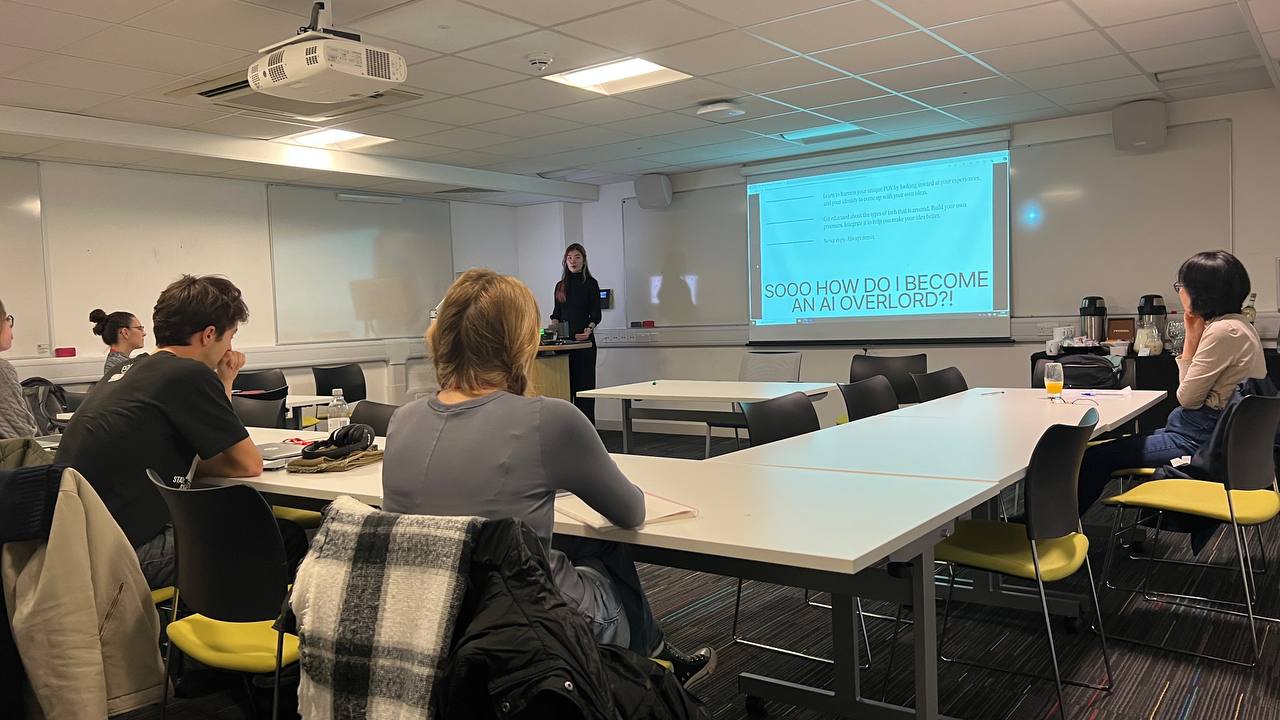
Start of the talk captured by Nicholas Ong
Wee organised the talk around three key principles, each aimed at encouraging students to question traditional views of AI and consider its use in the creative process:
AI Is a Tool to Help the Process.
Recent debates within the creative industries have raised concerns about AI as a replacement, but reconceptualising it as a tool shifts the focus. Within this first part of the talk, Wee emphasised that AI can enhance productivity and expand creative possibilities when used as a collaborative partner, guided by human vision and direction.
AI Does Not Have a Voice—You Do.
Wee emphasised the importance of human creativity and individuality in shaping AI’s outputs. She noted that while AI can mimic, it cannot originate thoughts, ideas, or emotions. Students were encouraged to see themselves as the primary drivers of creativity, with AI serving as a tool to amplify their voice.
AI Is Not a New Thing.
The talk closed with Wee highlighting the long history of AI in various forms. Wee reminded the audience that the current progress in AI technologies is part of an ongoing evolution. By appreciating its historical context, students can better understand how AI can be thoughtfully integrated into their practices.
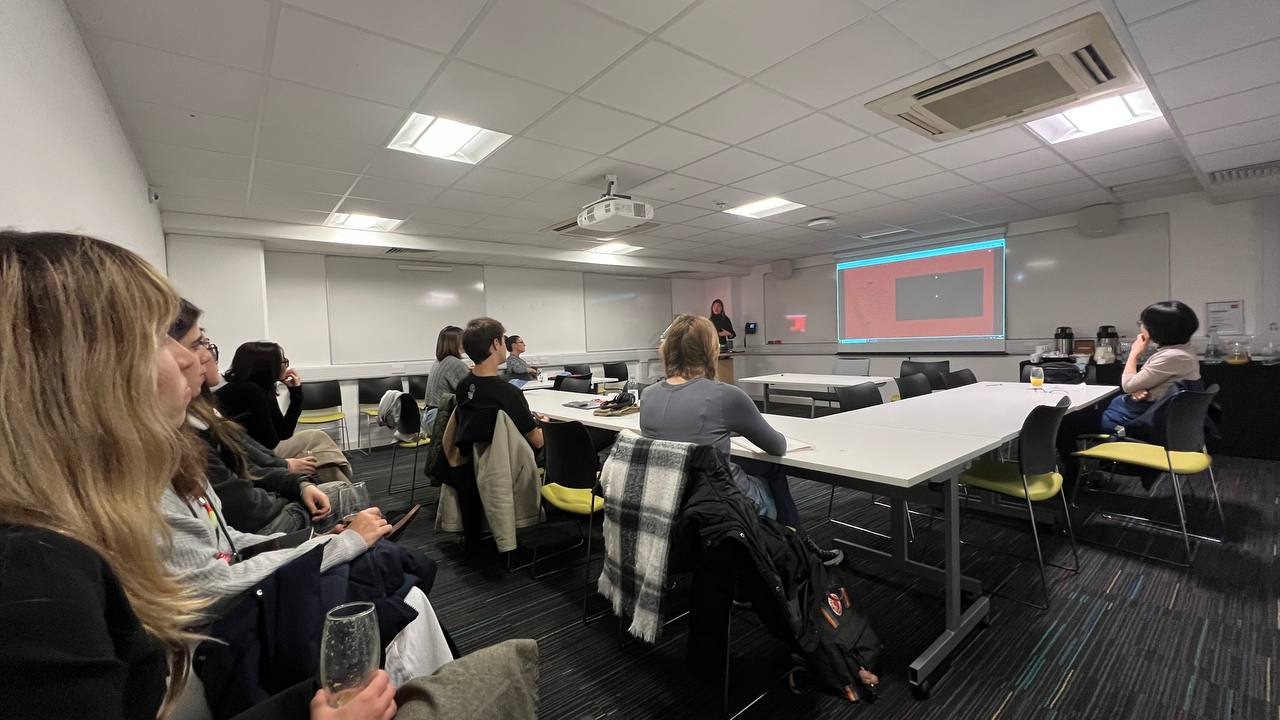
Examples of AI use, photo by Nicholas Ong
Artistic Reflections on AI
After the event, Nicholas Ong, Wee’s husband, a fine artist and painter who attended the talk, shared his perspective on AI as an artist, offering a thought for students to engage with:
“As an artist I don’t fear the mainstream use of AI because of how it drives an approach to creativity, it creates a shift in how I approach visual language and has pushed me to diversify and explore a counterpoint experience to AI imagery that I wouldn’t have done without it. For example, as a painter the expectant consideration for imagery created is usually two dimensional — but the evolution in my work in response to predictable imagery was to attempt a deconstruction of the sensorial experience and explore painting in three dimensions. Thus the use of light as a painting medium.” — Nicholas Ong, Singaporean Fine Art Artist & Painter Represented by Ames Yavuz.
Final Thoughts
The event explored AI’s potential as a tool within the creative industries, offering students practical guidance on effectively understanding and engaging with it. Winona Wee’s examples encouraged attendees to recognise AI as a valuable tool that can be used in the proper contexts to enhance their creative practices.
To learn more, you can visit Winona Wee’s LinkedIn profile or her website.
For insights into Nicholas Ong’s work, explore his website or follow him on Instagram at @nicholasong_studio.
The event was part of the Sustainable Cultural Futures project, led by King’s College London (UK) and Doshisha University (Japan). The project explores new directions in cultural policy and focuses on cultural value, institutions of cultural work, and digitalised cultural consumption to build a more sustainable future for the arts and culture.
 Culture, Media & Creative Industries @ Kings