In April CMCI’s Gender Work and Creative Industries (GWCI) research cluster hosted its second research hub event titled Gender, Labour and Activism in the Creative Industries.
The one-day event organised by the GWCI conveners Dr Wing-Fai Leung, Dr Christina Scharff and Dr Natalie Wreyford brought together participants to discuss the relationship between gender and activism across both the creative sector and education. The event was funded by the British Academy grant Feminism is trending: digital feminist activism, labour, and subjectivity.
The opening panel discussion, Industry Dialogue: Care and Inclusion in the UK Media Sector brought together the BBC’s Head of Creative Diversity, Dr Joanna Abeyie MBE and Independent Film and Documentary Producer who is one of the co-founders of the campaigning group Raising Films Jess Levick chaired by CMCI Lecturer in Cultural Work Dr Tamsyn Dent (Tam) to discuss the relationship between care, inclusion and creative work. This was followed by a paper from Professor Catherine Rottenberg (University of Nottingham) who spoke about her work as an academic/ trade unionist. Catherine’s paper was followed by a presentation from Christina on the work that goes into doing political activism online and the relationship between the digital and gender.
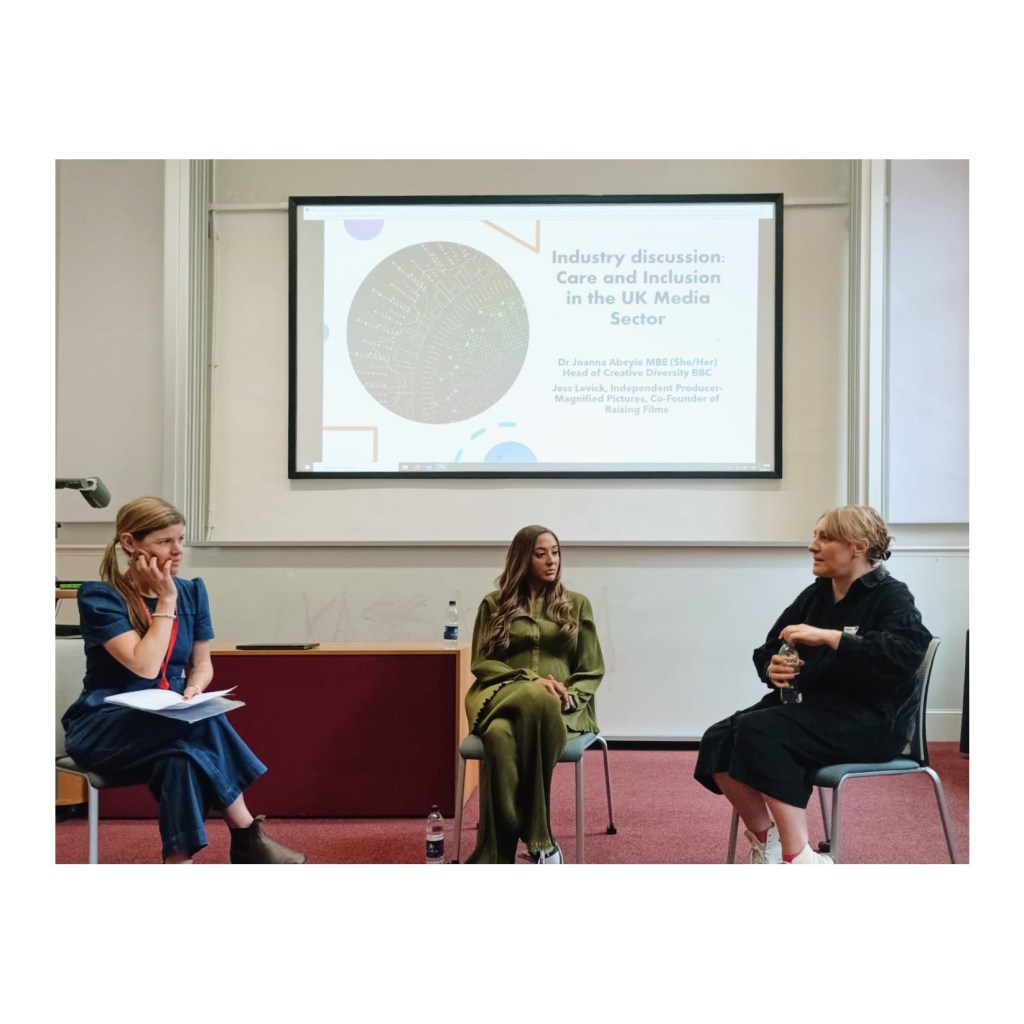
Joanna and Jessica spoke of their work around equity and inclusion within creative work. Both have an industry background and reflected on their personal journey into championing inclusivity within the sector. Raising Films was started by a group of parent and carer professionals from across the screen sector who wish to challenge the structural barriers that force carers out of the film and television sectors. As part of its missions to support, promote and campaign for parents and carers in the UK screen sector the organisation commissions research, runs training programmes and awards the Raising Films Ribbon for best practice.
Joanna set up an executive diversity and inclusion consultancy Blue Moon in 2020 and was awarded an MBE in the 2020 New Year’s Honours list for her services to diversity and inclusion in the creative and media industries. In 2022 she became Head of Creative Diversity at the BBC leading on planning and development of diversity and inclusion initiatives related to on-air talent, commissioning guidelines, diverse audience panels, and monitoring and reporting.
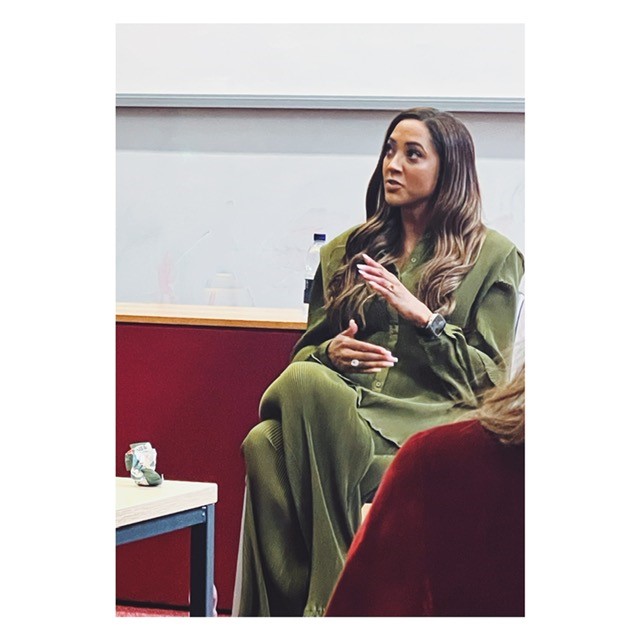
The discussion covered the personal labour of inclusivity work in the creative sector, the impact of Covid-19 on gender and access to creative work. We spoke about the term ‘activism’ and how it applied in this context and what scholars from HE can do to support and develop work in this area.
The second panel titled Activism and/as Work: Trade Union Organising and Feminist Activism included Catherine’s personal reflections on her work as a Trade Union representative within Higher Education. She spoke of her personal journey into union labour, the activities that her trade union activism involves, and the relationship between her academic and activist identity. Her talk provided detailed insight into the politics of contemporary trade union activism and the forms of labour involved in doing this activism.
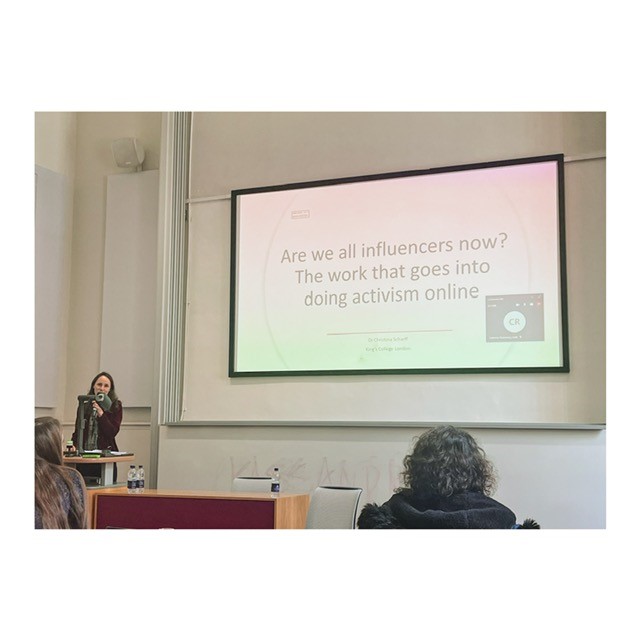
Christina’s paper entitled ‘Are we all influencers now? Exploring the work that goes into doing activism online’ drew on her current research on digital feminist activism to shed light on practices of self-branding amongst digital activists. Christina argued that widespread practices of self-branding demonstrate that neoliberal market logics work as a structuring, though not determining, force in digital feminist activism.
Please visit the Raising Films website for more information on their campaigning work and research reports.
 Culture, Media & Creative Industries @ Kings